Share
Colleges and Universities Are Competing for Attention Before Students Ever Apply
Students are choosing colleges on TikTok, Instagram, and Reddit before they ever visit campus. Most schools still are not ready.

Between 2010 and 2021, colleges and universities lost 15% of their enrollment nationwide. That’s 2.7 million fewer students than there were at the start of the last decade. In the aftermath, schools started to close their doors.
In 2023, it was two colleges per month; in 2024, about one college per week. Now, in 2025 and 2026, the demographic cliff that higher education leaders have warned about for years is arriving, and new Federal Reserve research suggests the pace of closures could increase as the pool of traditional college-age students continues to decline.
By 2041, the U.S. is projected to have 13% fewer 18-year-olds than it does today. So now, colleges are competing for fewer students in a market that has already been shrinking for more than a decade.

Social media is driving more applicants
When fewer students are entering the enrollment pipeline, every prospective student matters more than ever. And their first impression isn’t happening on campus, it’s happening online.
Today, 90% of prospective students’ interactions with universities start digitally, but your website isn’t telling the whole story. Program pages can explain tuition, credits, deadlines, and career outcomes. Beyond that, students are asking: Can I actually see myself there?
Students told Business Insider that the content they see from real students is actually shaping how they evaluate schools long before they ever visit campus. And instead of branded brochures or curated campus tours, prospective applicants are finding that content on social media.
Fifty-six percent of students report that a school’s social media presence matters most during their initial college search. On TikTok, the #collegelife hashtag has alone amassed 2.3 million posts and more than 30 billion views.
Students want to see orientation. Dorm move-in days. Campus events. Study spaces. Clubs. Games. First-day photos. And most colleges already have those photos and videos. They just struggle to organize them and get them into the hands of the people who can share them.
Why schools aren’t sharing more on social media
Unlike other types of institutions, four-year universities have an enormous amount of content happening every day across athletics, admissions, academics, alumni relations, student life, research, and more. That means a constant stream of content that schools could be using to get more students.
But most people on campus have no idea where that content lives or how to get it fast and share it. A photographer shoots Saturday’s football game. Hundreds of photos get uploaded. The main school account posts five of them. The rest sit in a folder.
Applicants want to see content from other students that isn’t carefully curated in stock-looking photos on your main university Instagram. The main school account still matters. But a post from a real student or athlete usually feels more believable than a polished brand post from the university.
That means schools need to stop thinking only about posting more on the main account. The real goal should be building a system that gets great content fast into the hands of the people already sharing campus life every day.
A better system for sharing campus content
PhotoShelter works with about 600 colleges and universities to solve this. The core concept is simple: content that’s easy to find actually gets used.

When assets are uploaded, teams can organize them by event, location, subject, person, approval status, and usage rights. AI Visual Search fills in the gaps when something wasn’t tagged the way a designer or department coordinator later goes looking for it. As one staff photographer put it, there’s no way to anticipate every search term someone might type, and no time to manually keyword thousands of images after every shoot.
The result is that a donor relations team can find photos of the programs they need without filing a request and waiting a week. An athlete can get game-day content before the news cycle moves on. A department can pull together a recruitment post without bothering the central marketing team for the third time that month.
Teams can also push content proactively; sending batches of photos directly to the people they want sharing them, with suggested captions, posting dates, brand credits, and any context the person needs to share it correctly.
The schools that show up on social will win the students who are still deciding
The demographic pressure isn’t going away. Every year, the traditional college-age population gets a little smaller, and every school is chasing the same shrinking group of prospective students.
The ones who enroll somewhere don’t always choose the school with the best programs, or the lowest tuition, or even the one posting the most. They often choose the school they feel the most connected to. And you have to meet prospective students where they are.
If you make it easy for real people to share authentic moments that link back to your school, the content will speak for itself.
About PhotoShelter
Founded in 2005, PhotoShelter is a leading digital asset management (DAM) platform for marketers and creatives. Our AI-driven solution simplifies content collection, organization, and distribution. Trusted by global brands like the NFL, MLB, Purdue University, and Wendy’s, we securely manage over 6.7+ billion assets and support nearly 100 million annual downloads.
Ready to transform your team’s creative workflow?
You May Also Like
-
Brand Growth, Trendsetters
More Leading Brands Join the PhotoShelter Millions Club
Get to know the latest brands to join the PhotoShelter Millions Club, each housing over one million files in their media libraries.
-
PhotoShelter News, Product Updates
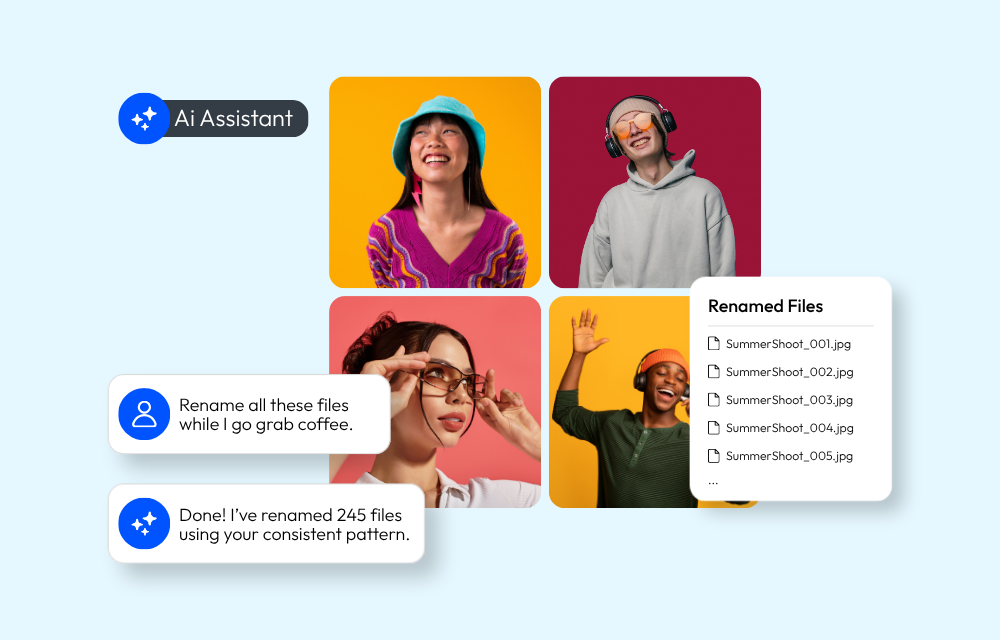
PhotoShelter Introduces AI Assistant
PhotoShelter’s AI Assistant helps teams rename files, build galleries, clean up metadata, and organize assets using plain-language requests.
-
DAM 101
What is the Best Bynder Alternative? PhotoShelter vs. Bynder
Compare PhotoShelter to Bynder on AI search, onboarding, and integrations. Find the best DAM for your team.


