Share
College Playoffs Need Speed at Scale
The College Football Playoff demands real-time content. See how top teams use faster workflows and DAM to own the biggest moments.

The 2025–26 College Football Playoff began on December 19 and ended on January 19 with Indiana winning the championship.
It was 30 days packed with 12 teams, playing 11 games across 8 states.
Each school has its own content team competing for the shots that capture the biggest moments, and everyone is trying to get them out in real-time. The first to post owns the moment.
Real-time speed doesn’t come from working harder or adding headcount. It comes from having a system that removes the extra steps that usually slow things down under pressure.
Speed when games overlap and deadlines close in
During postseason play, speed breaks down at handoffs.
- Camera memory cards need to be downloaded.
- Files need to be tagged and organized.
- Requests stack up while the game keeps moving.
When teams lack real-time delivery, content slows at the moment it should move fastest.
For the team at NCAA Photos, playoff coverage requires assets to move immediately from the field to content and marketing teams across multiple games.
“The incoming FTP (file transfer protocol) has become part of our norm now,” said Justin Tafoya, Staff Photographer & Digital Asset Manager at NCAA Photos. “We have a number of championships where the clients need stuff fast, and the ability to have freelancers just upload to an FTP and give those to clients has been super beneficial. I can’t imagine not having that.”
That real-time workflow pays off during the game’s biggest moments.
“The amazing diving catch, the game-winning shot… They have photos within 30 seconds, which certainly helps with engagement. It’s been a big part of what we do, and a big part of what they value.”
Justin Tafoya, Staff Photographer & Digital Asset Manager, NCAA Photos
Here’s how winning teams own their school’s biggest moments
The 2025–26 champions, Indiana University, use PhotoShelter to manage over 750k assets for 90k students. Senior Photographer James Brosher says it “helped elevate the brand photography at IU in general,” because more people have access to high-quality pictures.
Mississippi State’s mobile access via FileFlow allows designers and social teams to publish from anywhere, and consistent tagging keeps the archive usable across departments.
University of Louisville Athletics’ FTP delivery during games eliminates the need for card readers, and structured metadata helps them find assets in seconds.
University of Virginia Athletics’ live-transfers assets directly to social accounts, so publishing doesn’t pause between roles.
AI and automated organization under playoff pressure
Finding the right photo is as important as capturing it.
At the University of Central Florida (UCF), playoff-scale game days often include seven photographers producing roughly 2,500 images. Sorting that volume manually is not realistic under tight deadlines.
“Smart Galleries really shine when you have a lot of stuff that you have to cull through en masse,” said Conor Kvatek, Director of Photography for the UCF Knights. “When you take into account that we have 7 photographers on a game day, suddenly it’s 2,500 photos that you have to be aware of, so Smart Galleries really help everybody find what they’re looking for.”
Metadata applied before games routes assets automatically. No manual sorting.
Other teams use AI-powered search to cut time spent hunting for assets.
“A good example is searching for ‘fireworks’ with PhotoShelter AI, and it works incredibly well,” said Morgan Givens, Director of Photography for the University of Oklahoma Athletics. “The search tools make historic and recent content instantly accessible to everyone.”

A DAM that holds everything together
Speed and automation only work when teams operate from a shared system. It needs to support more people, more approvals, and more external partners without adding complexity.
For NCAA Photos, Workspaces keep departments aligned across marketing, ticketing, branding, and outside vendors.
“There are a lot of hands in the pot,” explained Jamie Schwaberow, Owner and Director of NCAA Photos. “And they’re all utilizing PhotoShelter.”
The goal is to remove the need for email requests, manual searches, and duplicate work.
“We knew that we needed to have a service like this for the NCAA. They have so many staff members who need to utilize the content. We wanted to have a solution that is way more sophisticated than just getting email requests and doing searches.”
Jamie Schwaberow, Owner and Director, NCAA Photos
DAM succeeds when it shortens the distance between creation and use.
Cover photo by James Brosher/Indiana University
Ready to transform your team’s creative workflow?
You May Also Like
-

Brand Growth, Trendsetters
More Leading Brands Join the PhotoShelter Millions Club
Get to know the latest brands to join the PhotoShelter Millions Club, each housing over one million files in their media libraries.
-
PhotoShelter News, Product Updates
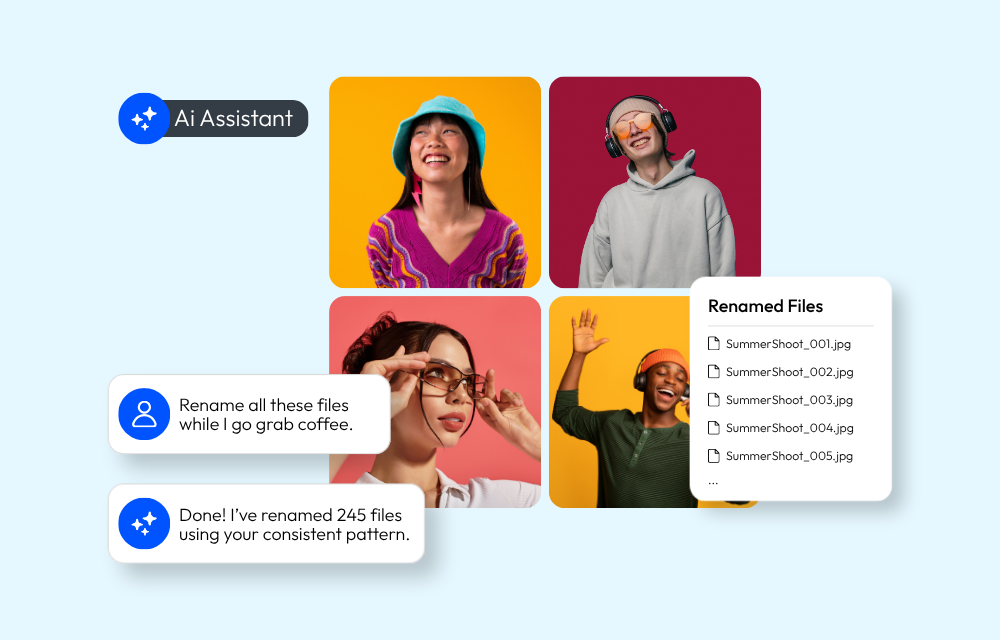
PhotoShelter Introduces AI Assistant
PhotoShelter’s AI Assistant helps teams rename files, build galleries, clean up metadata, and organize assets using plain-language requests.
-
DAM 101
What is the Best Bynder Alternative? PhotoShelter vs. Bynder
Compare PhotoShelter to Bynder on AI search, onboarding, and integrations. Find the best DAM for your team.


