Share
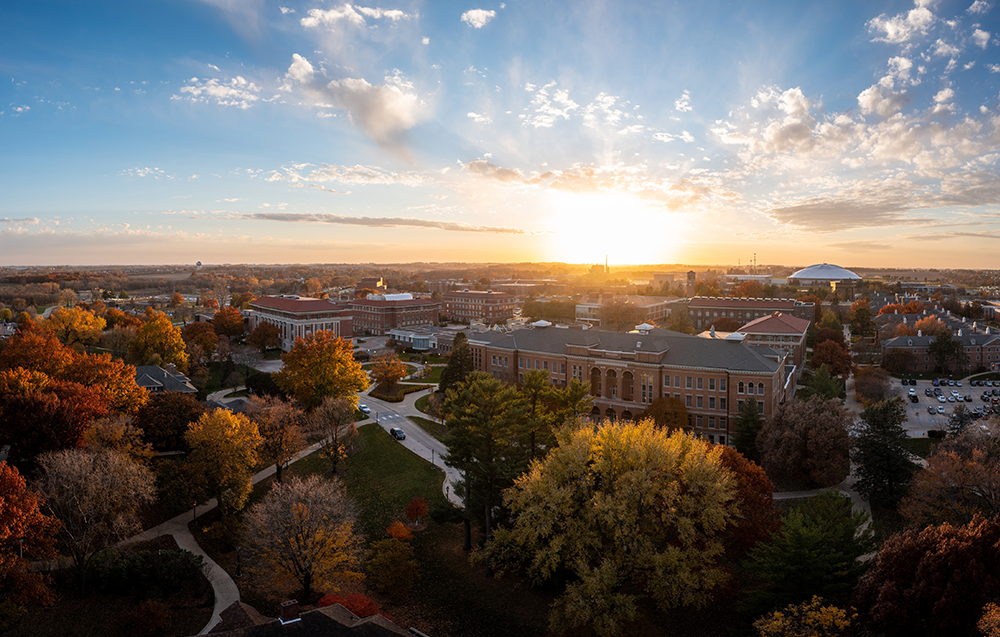
UNI Turns Photo Library Into UGC-Powered Content Engine
UNI uses PhotoShelter to organize assets with AI and scale content creation with UGC, giving their campus instant access to their visuals.
- 96k+ assets housed in PhotoShelter
- #2 ranking in the Midwest’s Top Public Schools by U.S. News & World Report
- 272k+ social media followers across platforms

UNI needed its visual library to work fast
The University of Northern Iowa is a public institution in Cedar Falls serving approximately 9,300 students, with more than 160 majors and minors, over 200 clubs and organizations, and 17 NCAA Division I athletic teams. The communications team supports the entire campus, where every department needs visuals. As that demand grew, so did the opportunity to find a smarter way to manage it. With hundreds of thousands of photos stored across systems, the team knew that a modern DAM could unlock the real value of every asset.
The challenge: Existing workflow wasn’t built for scale or speed
Sarah Judisch (Senior Graphic Designer), Jacy Werning (Social Media Coordinator), and Adam Amdor (Associate Director of Communications) rely on fast access to images every day. They saw their brand re-launch as the perfect moment to rethink how visual assets were managed and distributed across campus.
- Assets were hard to find. “We had hundreds of thousands of photos, and people had to come to our office, scroll through them on a computer, copy them to an external drive, and take them back,” Sarah recalled. “Even for me, searching took forever — you had to manually search through everything in Bridge, and later Lightroom. It was a time-consuming process to find visual assets and keep current materials distributed to other creators on campus.”
- Outdated tools made delivering assets slow. Campus creators working on their own projects depended on the communications team to send files, and every handoff ate into everyone’s time. In Sarah’s words, “It took so much time, and it made everything harder than it needed to be.”
- Valuable time lost to access requests. They started with a system where people had to ask for access to files, which created more admin work. “At first, our rollout was pretty transitional,” Sarah said. “People had to request access, so we were basically gatekeeping. We eventually moved away from that — it wasn’t worth the extra work.”
- Consistent tagging wasn’t possible. With freelancers contributing content, the team wanted a platform that could accommodate different contributors without breaking down. “We don’t have a designated photographer,” Jacy said. “Our multimedia coordinator organizes a lot of videography and photography, but he isn’t always out shooting, and that creates gaps. We also hire freelancers, and not everyone tags the same way. We’re just not in a place where detailed tagging is ever going to fully catch up, and we don’t have time for it most of the time.”
“Teams are constantly evolving. We don’t have time to constantly update permissions, especially at a university of our size.”
Sarah Judisch, Senior Graphic Designer, University of Northern Iowa

The solution: One shared library makes content easy to use
What used to require office visits, external hard drives, and endless scrolling now runs through a single platform built for a decentralized university. PhotoShelter gave UNI the structure to organize everything and the AI intelligence to find it, even when tagging falls short.
- Managing individual permissions is easy. At a university where teams are always evolving, the last thing anyone needs is another admin task. “SSO is helpful for a lot of reasons,” Sarah said. “We don’t have to manage permissions constantly. It saves time, and it helps everyone stay on brand because they can access the right assets.”
- Flexible permissions balance access and control. Most campus users can access what they need without any gatekeeping, but the team still manages what shouldn’t be public. “The biggest question was always: who should have access to what?” Sarah explained. “Now, for the most part, everybody can access what they need. But we can keep certain things under lock. We’re able to set permissions when we need to.”
- AI makes a huge library searchable. “Our library has hundreds of thousands of photos,” Jacy said. “The AI Visual Search brings up images I would never see otherwise, and it makes everything faster. On the social side, we move at a really quick pace. I had a project going out that needed an image in the next 10 minutes, and the AI search gave me three perfect options. I picked one and ran with it.”
- Smart filtering keeps social content fresh. On a campus where the student body turns over every four years, yesterday’s photos age fast. “For social, if a photo is more than a year old, I’m probably not going to post it,” Jacy said. “Students cycle through quickly, and people notice. So filtering by date is something I use often.”
“We’re not going to tag everything, like ‘students walking outside,’ but I search for that all the time. Early on, we weren’t thinking about details like interior versus exterior, or seasonal scenes. Now I can search things like students walking outside in snow, and it helps a lot.”
Sarah Judisch, Senior Graphic Designer, University of Northern Iowa

UGC turned the campus community into a content engine
UNI has too many moments happening at once for a small team to capture. Most of the best stories live with students, families, and the community (also known as user-generated content or UGC). UGC gave the team a way to turn those moments into usable content at scale.
- Students became on-the-ground creators. Adam explains, “We hosted a campus-wide day of service that involved more than 2,000 volunteer opportunities across dozens of projects. There’s a real desire to document as much as we can, and we already have a tool that can help. We were able to use PhotoShelter UGC to collect hundreds of assets through a campus army of content gatherers, all submitting photos from their point of view.”
- Content packaging became fast and simple. For Jacy, “Now everything is in one place. I can download the story and photos, drop them into a folder, and send them straight to our content writer. The efficiency surprised me, and honestly, I’m excited I don’t have to go read through hundreds of Facebook comments.”
- UGC campaigns drove strong engagement. Jacy shared the results of a campaign asking couples who met at UNI: “We got over 110 submissions and almost 200 photos, with two-to-three-paragraph stories.” The response included detailed, emotional stories that connected with their audience.

- Authenticity improved performance. UGC consistently outperformed polished content, including posts with 300% higher share rates. Real moments from students and families resonated more than staged visuals. Jacy explained, “One of our highest performing back-to-school posts was moms and dads submitting photos of hugging their kids goodbye. We can’t always capture those moments since they’re happening in dorm rooms and in the backseats of minivans. But that’s the content that performs well.”
“I think for us, authenticity just means listening. Listening to our audience and listening to our data. Whether that’s a day-in-the-life video filmed by an 18-year-old walking around campus or a collection of photos from the first day of classes , content like that, is what our students love. And now we’re able to capture it.”
Jacy Werning, Social Media Coordinator, University of Northern Iowa
UNI keeps growing with a modern DAM that scales
What once required office visits and external hard drives now happens in seconds from anywhere on campus. The team spends its time creating instead of searching, and every department works from the same visual foundation. The archive grows every semester, and nothing gets lost.
“Before PhotoShelter, it took forever to find assets and to share and distribute them. It was so time consuming. I can’t imagine not having a digital asset management system now.”
Sarah Judisch, Senior Graphic Designer, University of Northern Iowa
Ready to transform your team’s creative workflow?
You May Also Like
-

Education
UNI Turns Photo Library Into UGC-Powered Content Engine
UNI uses PhotoShelter to organize assets with AI and scale content creation with UGC, giving their campus instant access to their visuals.
-


Retail & Restaurants
FreshDirect’s Content Strategy Cooks with PhotoShelter
With PhotoShelter, FreshDirect moves faster. Now, they're finding, sharing and launching content quickly while keeping their brand consistent.
-

Sports
Sporting KC Finds Any Photo in Seconds, Even From 20 Years Ago
With PhotoShelter, Sporting Kansas City manages a growing archive, protects its visual history, and shares photos fast with AI.


